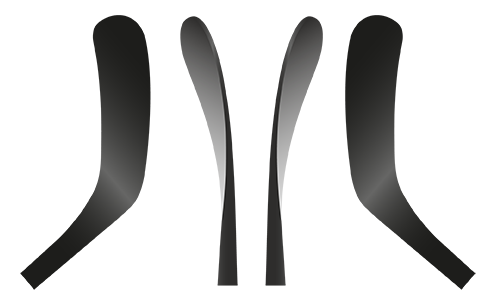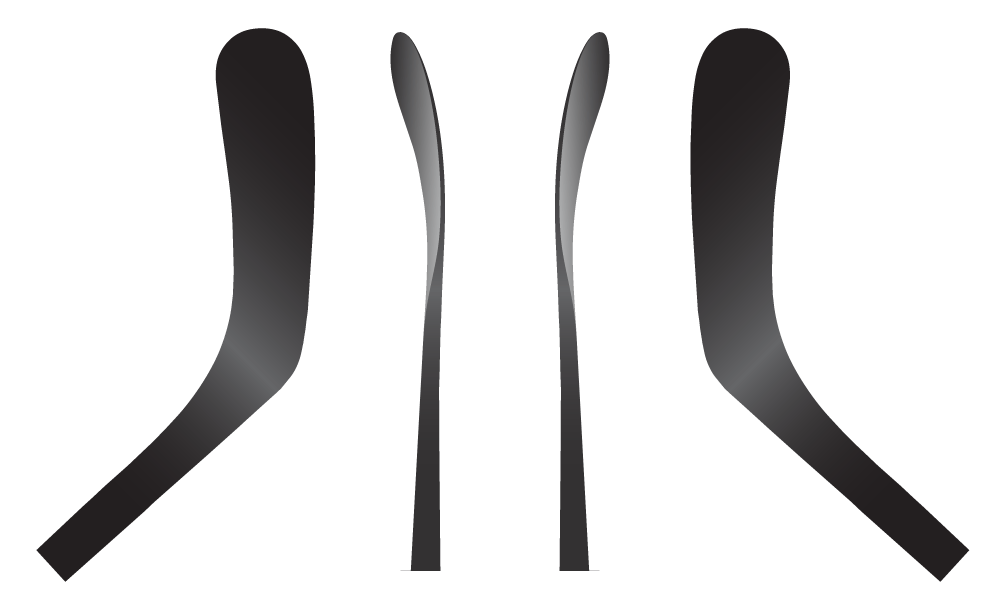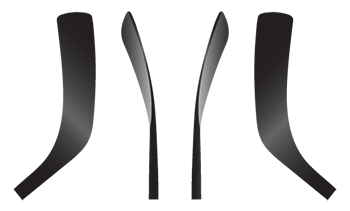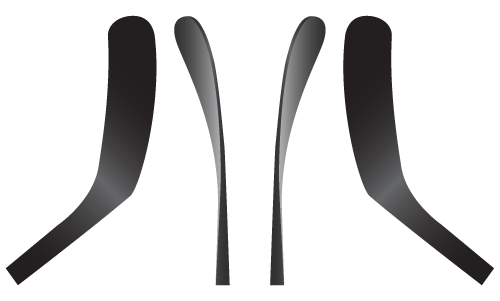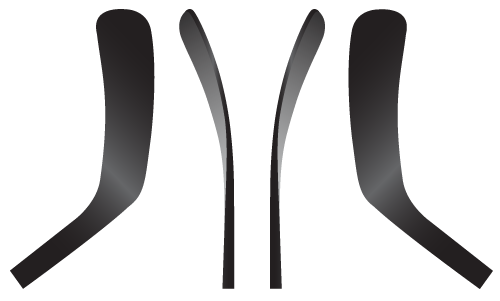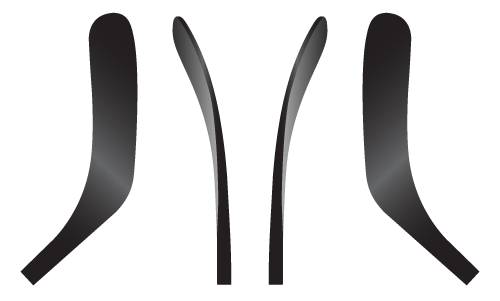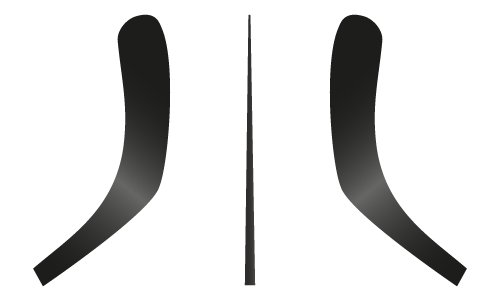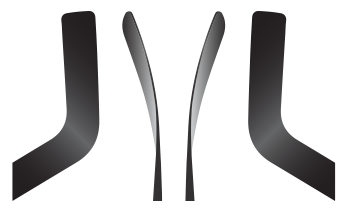
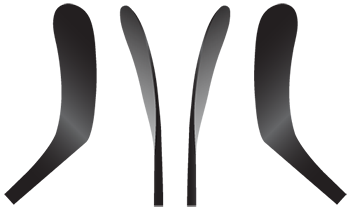
GW28 / GW28M

Fast releases, puck control, toe drags and creative offense.
GW28M (Max Blade Height)
Other-brand shape references
- Bauer P28 Eichel
- CCM P28 McDavid
- Easton E28
- Sherwood P28
- True Hockey TC4
- Verbero V28
- Warrior W28 Yakupov/Gallagher
THE GWIND SPECIFICATION GUIDE
Find the shape that feels familiar. Then make the details your own.
A clearer specification starts with the details.
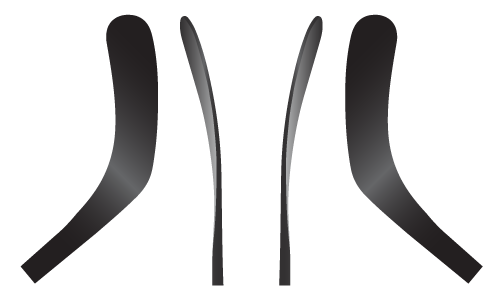
A blade curve is the shape of the blade from heel to toe. A pattern combines where the bend starts, how pronounced it is and how open the face is. Blade length, toe shape and lie also help define the complete profile.
Toe, mid and heel describe the location of the curve. An open face tilts upward more than a closed face. Two patterns can look similar in a photograph while feeling different on the puck, so use the full profile as your reference.
The curve changes how the puck sits on the blade and leaves it during a pass or shot. It also affects the forehand and backhand feel. The right starting point is a pattern you can control consistently, rather than the most pronounced curve available.
Use the GWIND chart below to compare shape references. Record your current pattern and explain what you want to change: puck lift, toe control, passing or backhand feel. Other-brand names are comparison references; confirm the final GWIND geometry before ordering.
Start with a familiar shape.
Make the rest your own.
GWIND curve profiles and familiar shape comparisons. Confirm the final geometry, dimensions and availability for your build.
13 GWIND profiles

Fast releases, puck control, toe drags and creative offense.
GW28M (Max Blade Height)

A balanced shape for puck control and accurate quick releases.
GW92M (Max Blade Height)

Fast, toe-loaded snapshots and offensive handling.

Hybrid puck control and fast-release shooting.
(Max Blade Height)

Between GW92 and GW28: quick releases, toe drags, creative offense and easy puck elevation.
Custom curve request — confirm the final profile with GWIND.

Forehand and backhand shooting with controlled puck handling.

Big shots and slap shots; strong heel curve with puck lift.

Defense, slap shots, one-timers and powerful point shots.

Rapid puck elevation, powerful wrist shots and close scoring.

A pronounced curve for puck elevation, wrist shots and offensive puck handling.

Quick releases, puck elevation and offensive accuracy.

Straight-blade control, clean passing and traditional feel.
Custom curve request — confirm the final profile with GWIND.

Goalie puck control, accurate outlet passes and a square tip.
Custom curve request — confirm the final profile with GWIND.
Try another pattern name or show all curves.
CURVE / QUESTIONS, ANSWERED
Common questions about curve, before you settle on your specification.
ASK GWINDA toe curve places more of the bend toward the tip; a mid curve bends nearer the middle. Compare them using the same passing, shooting and puck-handling drills so you can judge the change in contact and release.
No. Face angle changes how the puck leaves the blade, but technique and blade control still matter. If shots rise more than intended, compare a less open profile alongside your current one.
The brand names in the chart help describe familiar shapes. They do not guarantee identical geometry or an affiliation. Confirm the GWIND pattern, dimensions and available build before approving a sample.
Check them together. The curve chart lists lie information for each pattern, and not every curve has multiple lie options. Start with a familiar shape, then check how that blade sits on the ice in your usual stance.