
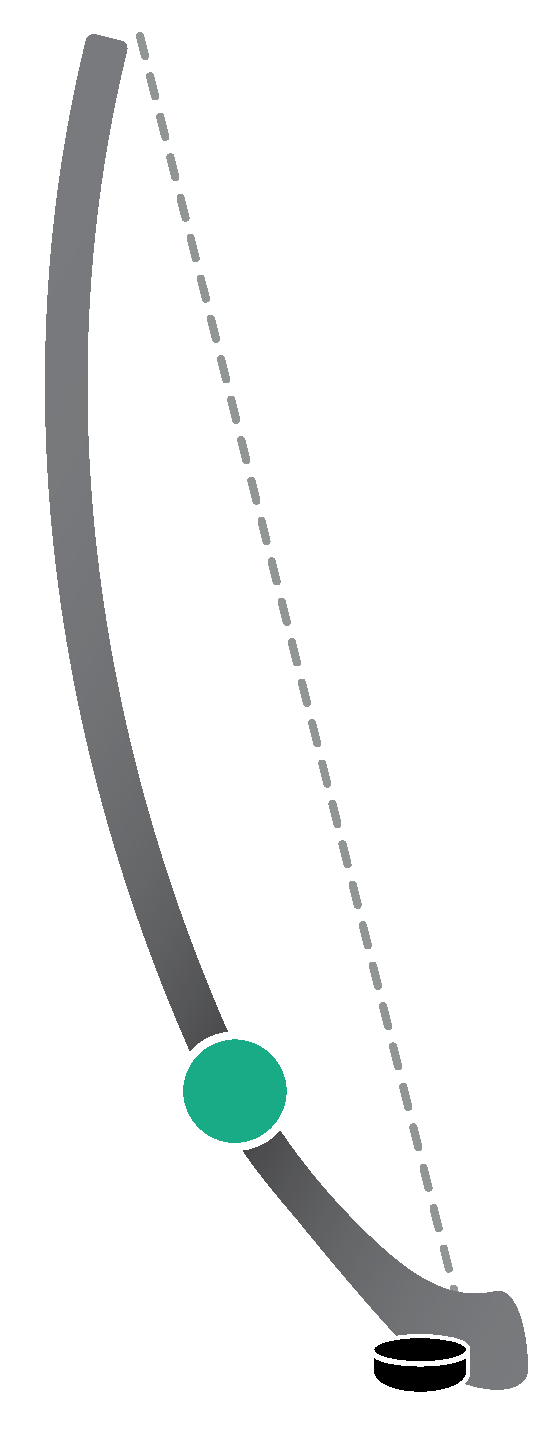
Low Kick
Low kick describes a loading zone nearer the blade. Compare the feel with your usual wrist and snap-shot motions.
Best For
- Compact shooting motions
- Your usual hand placement
- Snap shots
- Same finished length
- A suitable flex
THE GWIND SPECIFICATION GUIDE
Match the loading profile to the shots you actually take.
A clearer specification starts with the details.
Kick point describes the area of the shaft designed to flex most during shot loading. It is a construction profile, rather than a separate joint or a point that you can move after the stick is built.
Low, mid and high describe the general loading location. Hybrid profiles combine characteristics across loading zones. These names help compare intended feel, but they do not describe every detail of a stick’s response.
The loading profile affects how a shaft responds as you put force into it and release a shot. A low profile is often associated with compact, quick-release movements; a mid profile can suit players who lean into a more deliberate load.
Choose around your hand placement, shooting motion and usual situations. Compare the profiles below with the same finished length and a suitable flex. Position alone is not a reason to choose a specific kick point, and no profile guarantees more shot power.
Kick point describes the shaft’s loading zone. Compare loading feel with your usual shooting motion.
Low kick describes a loading zone nearer the blade. Compare the feel with your usual wrist and snap-shot motions.
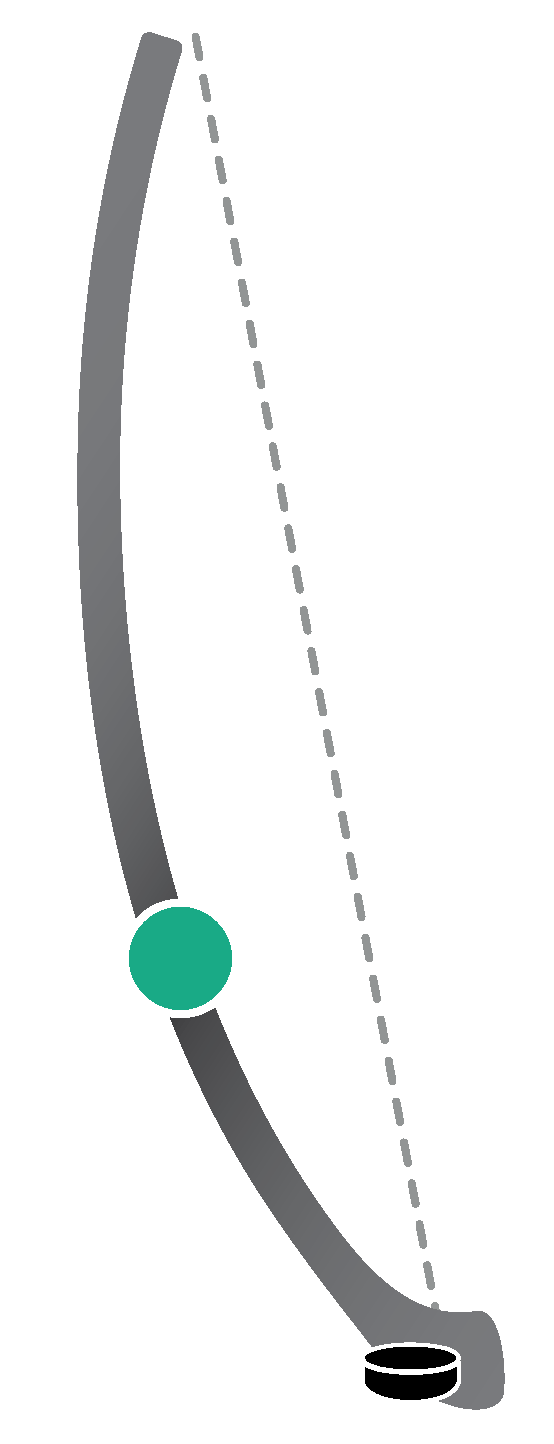
Hybrid describes a profile that combines loading characteristics. Compare its feel with a familiar low- or mid-kick stick.
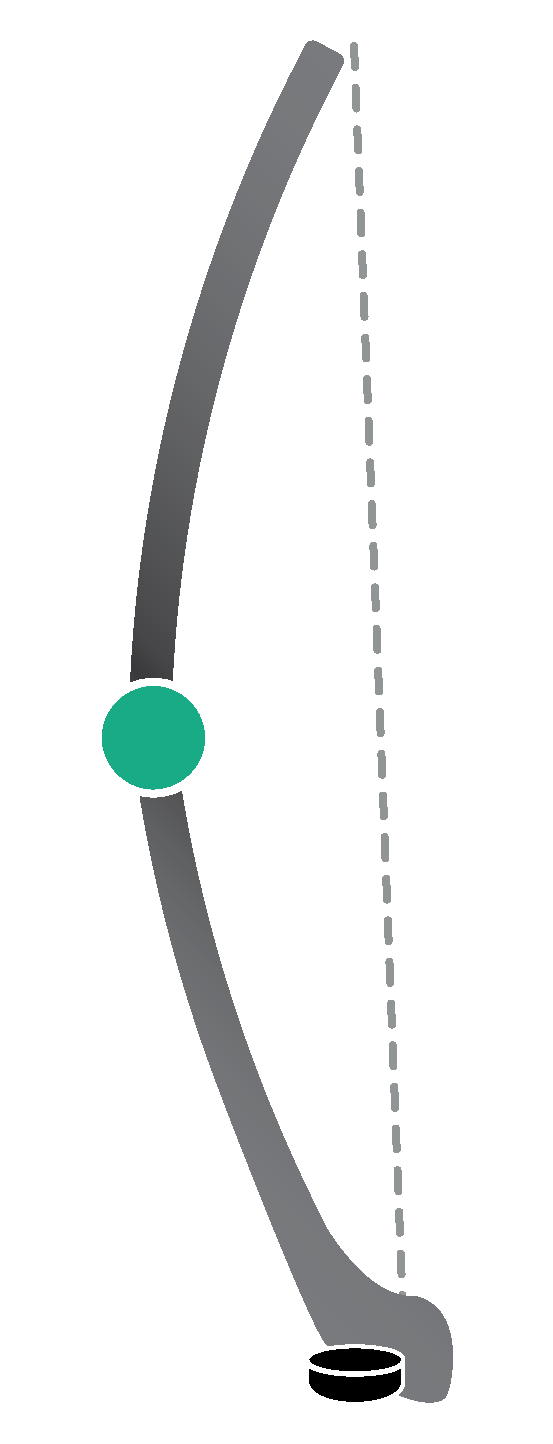
Mid kick describes a loading zone farther up the shaft than low kick. Compare how it feels during a fuller shooting motion.
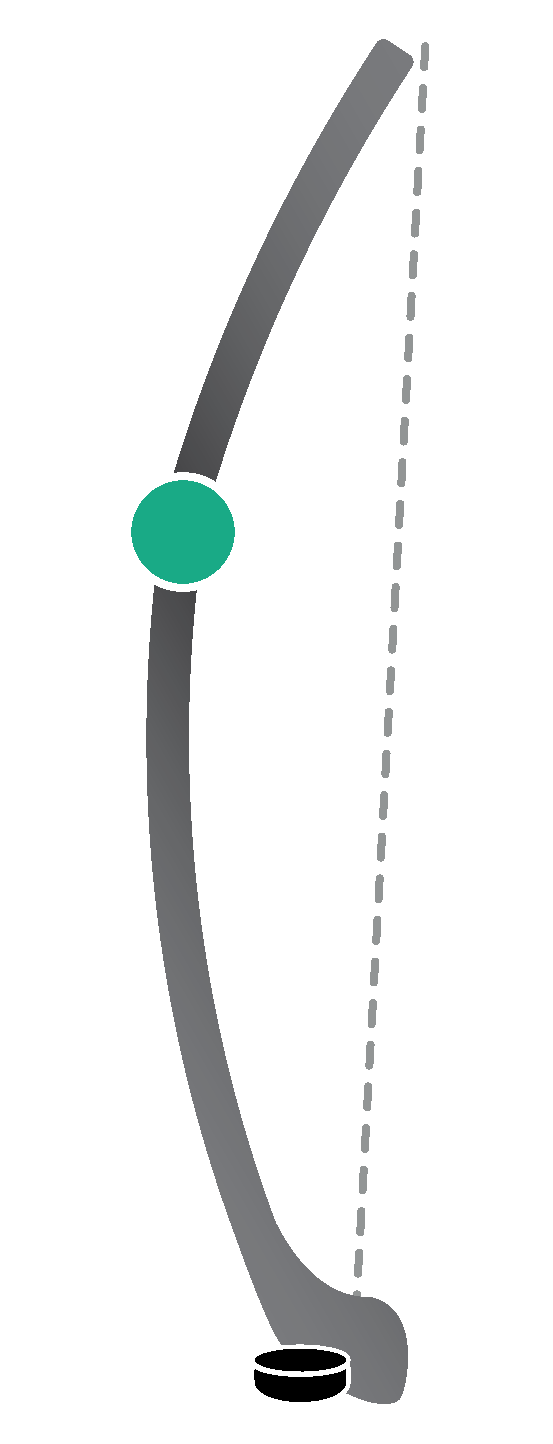
A higher loading zone is another profile to compare. Check its feel alongside your finished length, flex and usual shooting motion.
Choose by your shooting motion, hand placement and preference. Compare profiles at the same finished length with a suitable flex. Confirm the available construction with GWIND. There is no universally best kick point.
Build details and availability are confirmed with GWIND for your project.
DISCUSS YOUR SPECSKICK POINT / QUESTIONS, ANSWERED
Common questions about kick point, before you settle on your specification.
ASK GWINDLow-kick designs load nearer the blade, while mid-kick designs load farther up the shaft. Their release feels different, so compare your quick shots and fuller shooting motions rather than choosing from the label alone.
A hybrid profile combines loading characteristics rather than relying on a single simple category. Ask how the available GWIND profile is constructed and compare its feel with a low- or mid-kick stick you already know.
No. Flex is a stiffness rating; kick point describes where the shaft loads most. A low-kick stick can be offered in different stiffnesses, subject to the available construction.
No. Your actual release, hand placement and preference matter more than a position label. Include your current stick and the shots you want to improve when discussing a profile with GWIND.