
Lie 5
- Longer sticks
- Lower / deeper skating stance
- Puck farther from the body
THE GWIND SPECIFICATION GUIDE
Bring your blade, stance and puck position into the same conversation.
A clearer specification starts with the details.
Lie describes the angle relationship between the shaft and the blade. It helps explain how the sole of the blade meets the ice when you hold the stick in your playing stance.
The number is one part of the blade profile. Blade rocker, stick length and hand position also affect contact. Use the Lie 5 and Lie 6 illustrations as comparisons, then check the specific pattern you plan to order.
A suitable lie helps keep useful blade contact while you handle the puck, pass and shoot. If only the heel or toe contacts the ice in your normal stance, review the fit instead of compensating with an uncomfortable hand position.
Check lie together with length and puck distance from your body. Tape wear can offer a clue about contact, but it is not a complete fitting test. Watch the blade in your usual stance and compare the available profile before making a change.
Lie determines how the blade meets the ice during skating, handling, passing and shooting. A suitable angle supports contact, control and comfort.
A more upright shaft-angle reference; check blade contact in your usual stance.
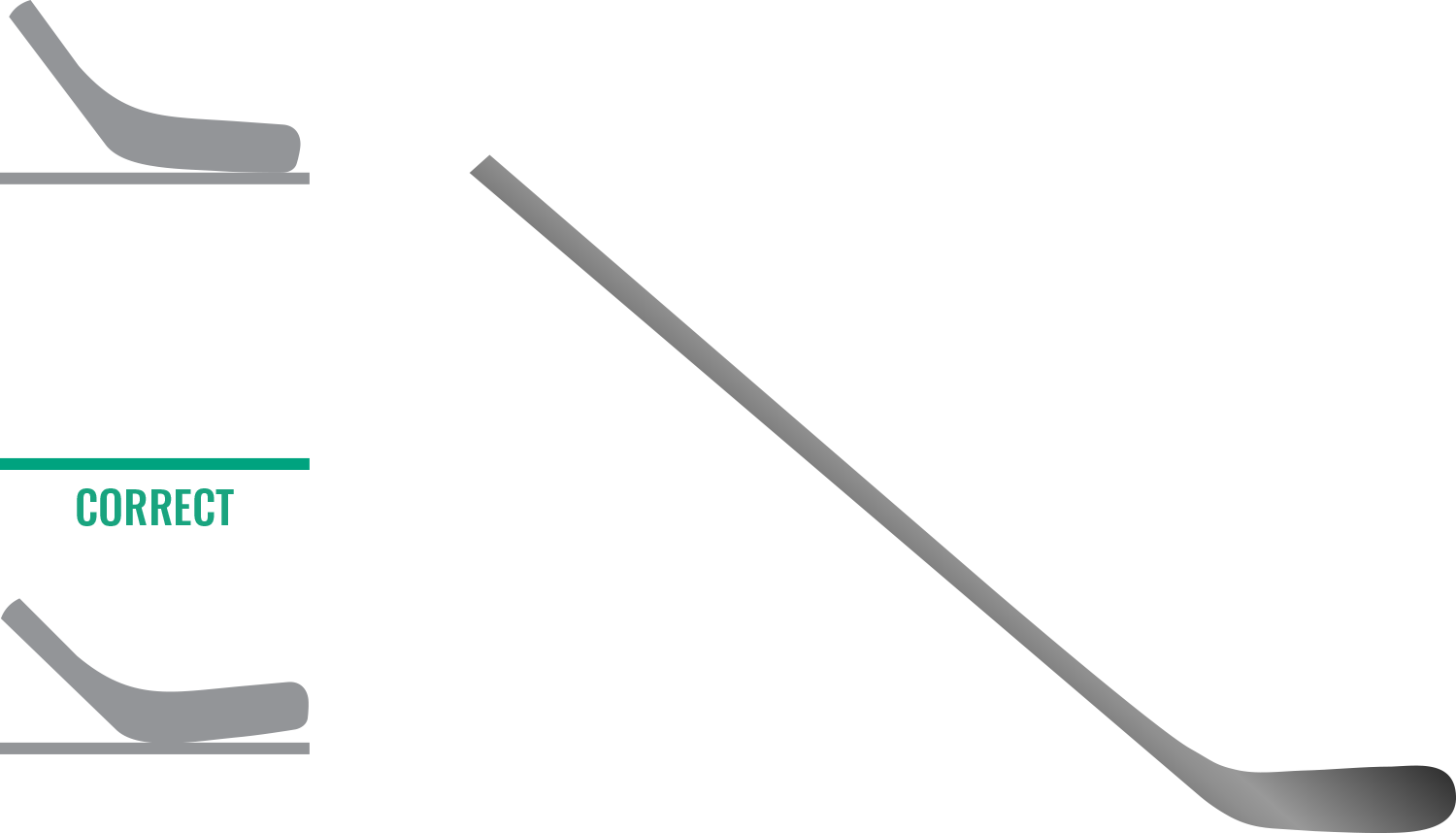
Toe lifts: lie may be too low.
The blade sole contacts the ice evenly.
Heel lifts: lie may be too high.
Each pattern has its own lie profile; multiple lie choices are not available for every curve. Check the curve chart for each pattern.
Build details and availability are confirmed with GWIND for your project.
DISCUSS YOUR SPECSLIE / QUESTIONS, ANSWERED
Common questions about lie, before you settle on your specification.
ASK GWINDIn the references below, Lie 5 suits a lower shaft angle and Lie 6 a more upright setup. The practical fit depends on length, stance and the blade’s full geometry, so check the actual pattern rather than the number alone.
Hold your stick in a normal skating stance with the puck where you usually play it. Look at heel and toe contact and compare the feel while passing and handling. Avoid judging the fit only while standing upright.
Not every curve offers multiple lie choices. The curve chart records pattern-specific information. Confirm the exact curve and available lie together before approving your build.
Yes. Length changes your hand position and the shaft angle you use to reach the puck. Recheck lie and blade contact after a meaningful length change rather than assuming the old fit still applies.